Arquitectura i Accessibilitat Barcelona

Residència Teatre del Sol

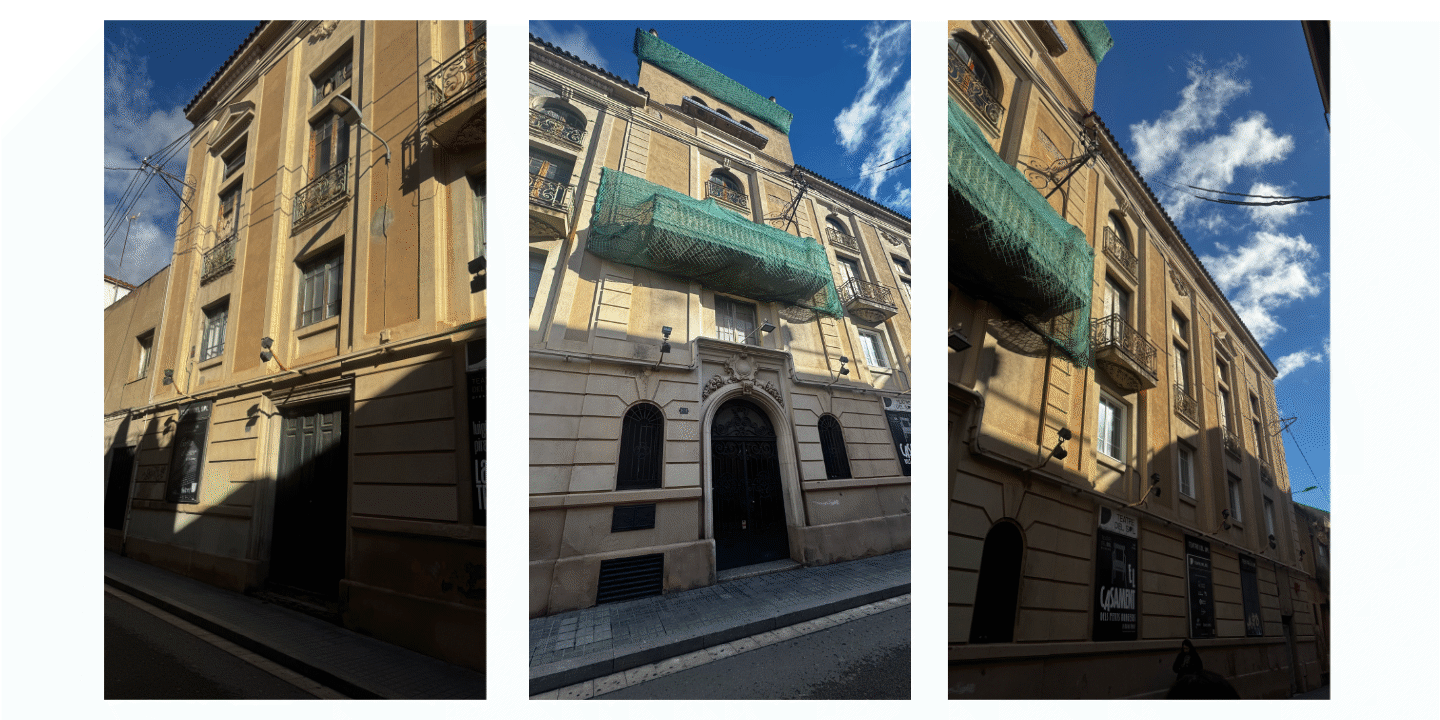
The building of the Teatre del Sol (Sabadell) has an origin closely linked to the workers’ cooperatives of the late nineteenth century, specifically to the cooperative “La Sabadellense” promoted by Joan Salas Antón. Acquired in 1887, the building underwent a major neoclassical reform in 1929 by the architect Santiago Casulleres. In 1986, the Teatre del Sol moved on to occupy it, restoring the façade and opening theatres. Currently, the property is protected by the Special Heritage Plan of Sabadell for its great historical and architectural value.

The proposal responds directly to an urgent social need of the environment: the chronic lack of residential spaces adapted for the elderly in the neighborhood and its area of influence. This shortfall has been seriously aggravated by two main factors: on the one hand, the widespread increase in life expectancy, which translates into a significant percentage increase in the population over 65 years old; on the other, a profound change in the criteria of social and health care.

Traditionally, income in residences responds to purely social reasons (solitude, lack of resources or inadequate housing). Currently, however, the vast majority of income is produced by situations of physical or cognitive dependence. This forces us to redefine the model: classic residential activity remains the main axis for those people who can no longer live in their homes, but it is essential to also offer a range of integrated external services (such as Day Center, telecare, home care and advice). The ultimate goal is to provide the neighborhood with an infrastructure that allows older people to prolong their stay in their own homes as long as possible, guaranteeing satisfactory conditions of autonomy, security and social life, and offering a dignified and assisted residential income when it is no longer viable.

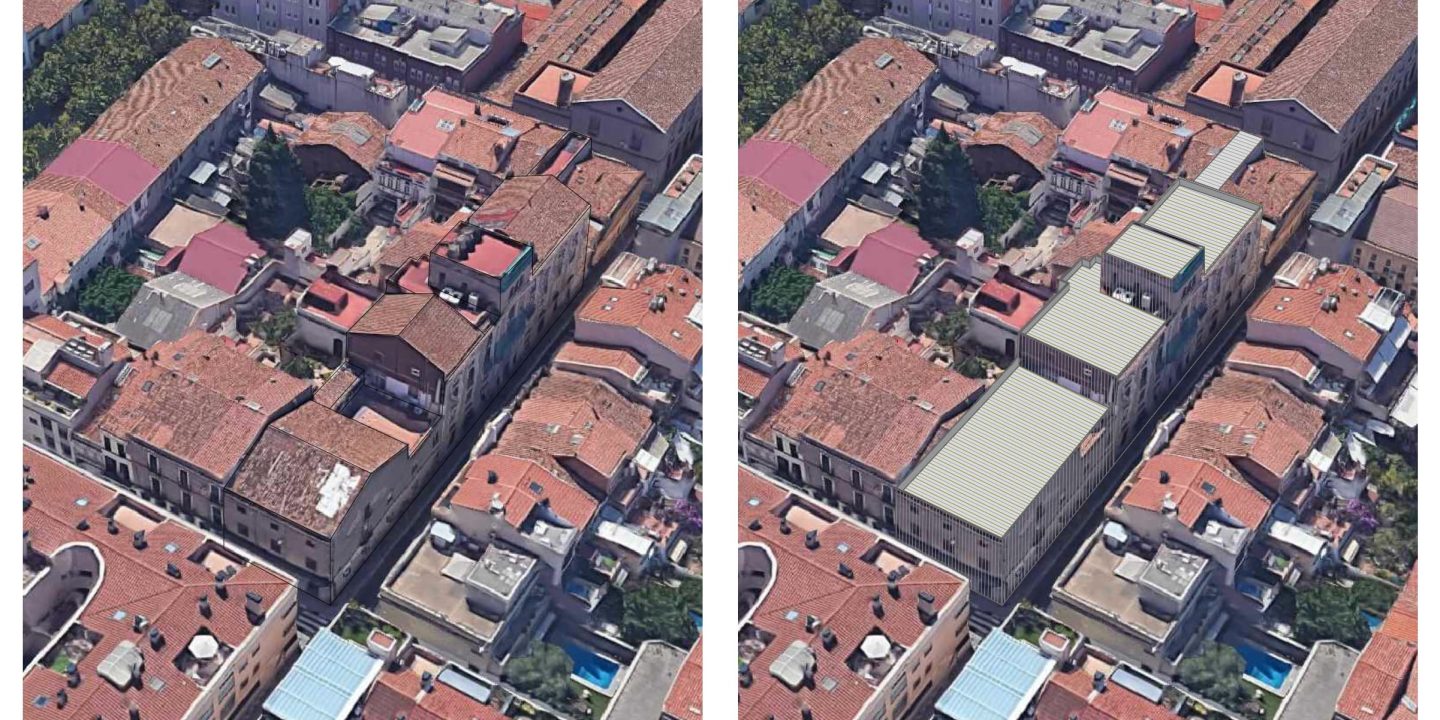
The property is divided into three sectors: the northern part (bodyhouses and supermarket), the central part (the noucentista body of architectural interest with access through the C. del Sol) and the southern part (storem and dressing rooms in the C. de Montserrat). Structurally, it has load-bearing walls and metal beam slabs with a Catalan vault in good condition and without deformations (the old cracks of the badalot are already stabilized). The main neoclassical façade, covered with mortar imitating stone and with balustrades, has a regular state and requires maintenance and repair of specific damage to the cladding.

An integral interior reform is proposed, the construction of a new building and the change of use to house an assisted residence (maximum 90 places) and a day center (20 places).

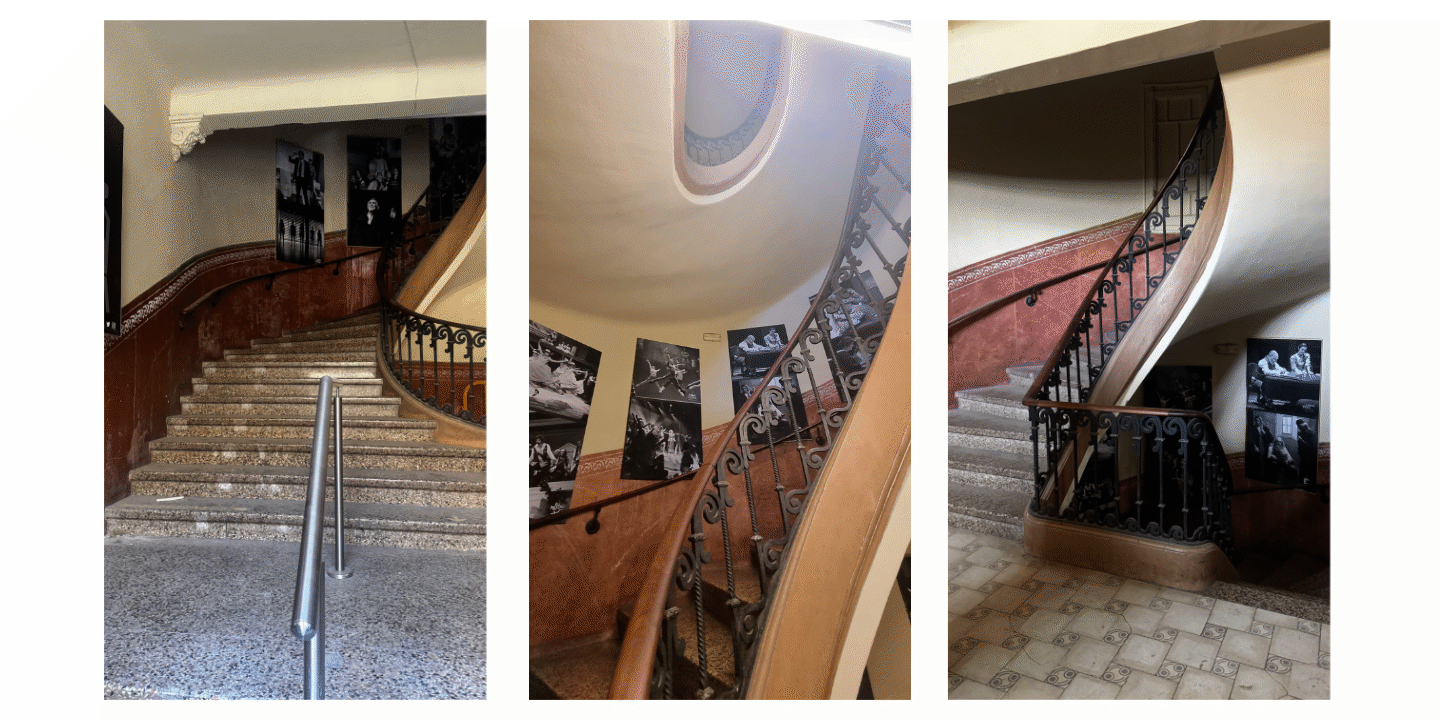
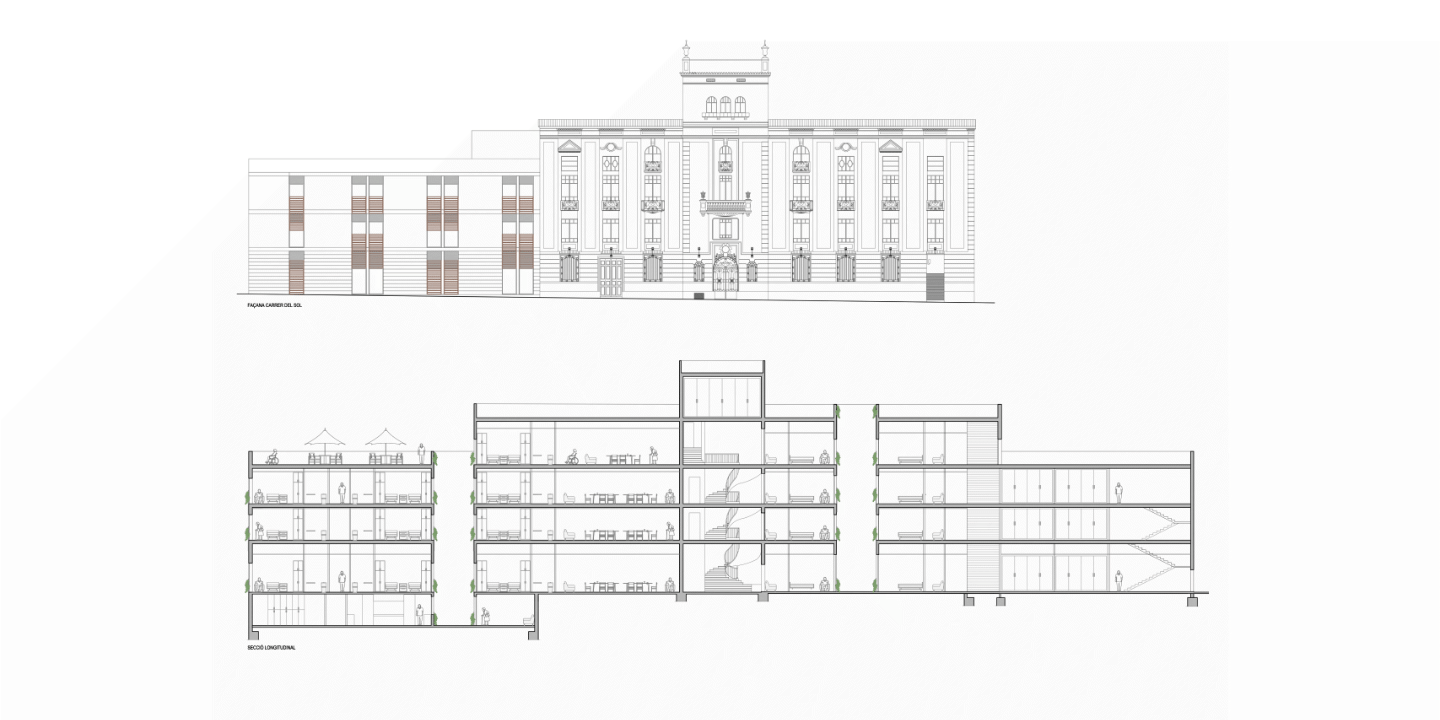
  • Preservation: The neoclassical façade of Carrer del Sol (which will be the public face of the residence) and the monumental central noble staircase with a circular floor plan are preserved and restored.
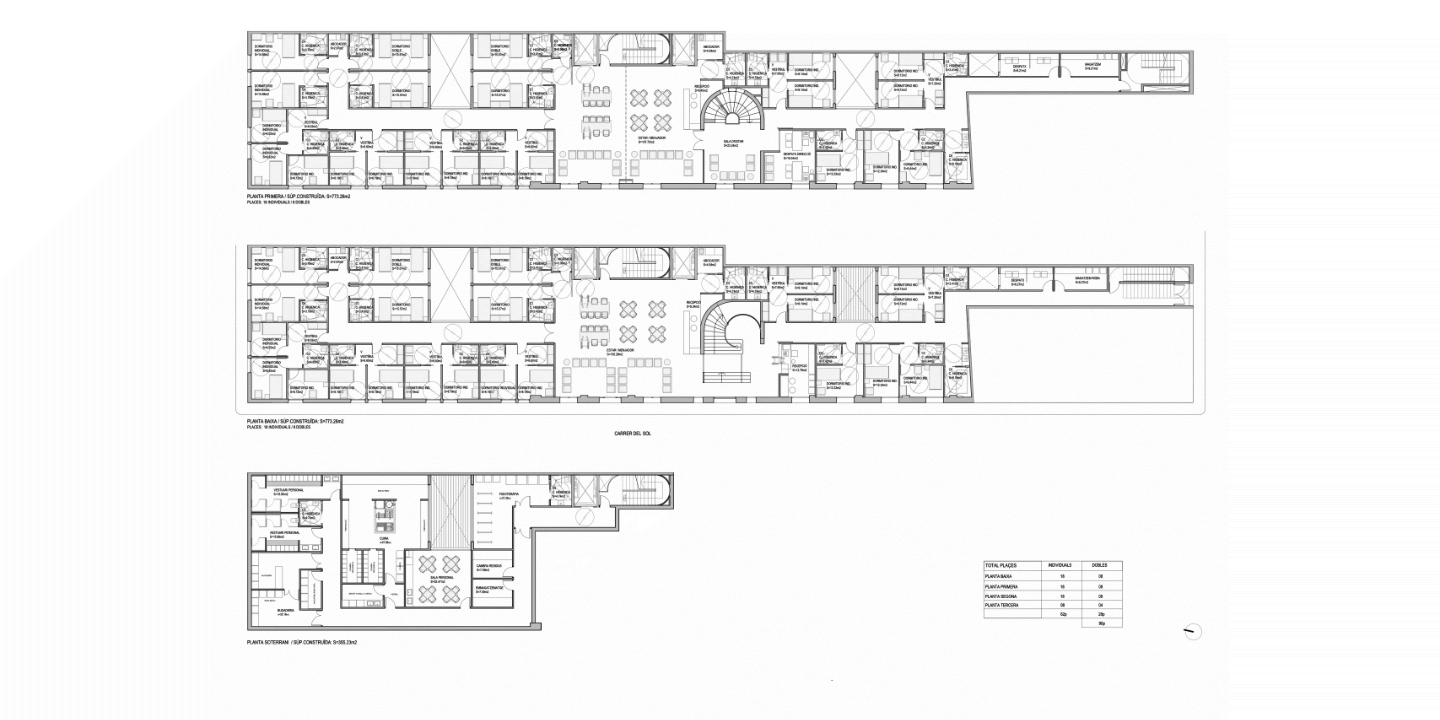
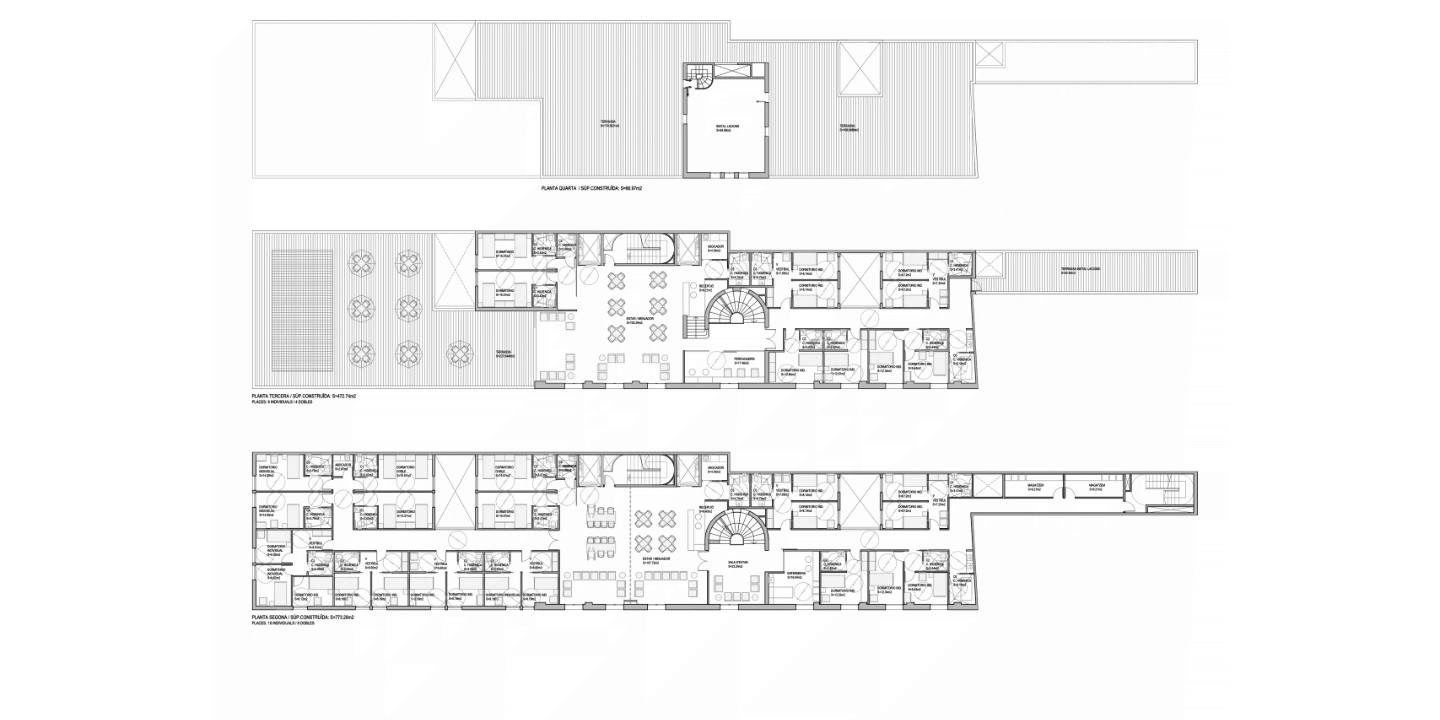
  • Functionality and coexistence: The building will be organized into 4 main floors, technical floor and basement of services. To guarantee well-being, each plant will be divided into two coexistence units with a maximum of 20 residents. The functional program has 62 single rooms and 28 double rooms.
  • Common spaces: Flexible and open-plan multipurpose rooms (dining room and activities) and a third floor dedicated to physiotherapy and adapted sport will be created. Part of the volume will be reconfigured to open landscaped interior patios (terraces) and the roof will be transformed into a green roof with an urban garden to promote socialization and the perception of being “as at home”.

Residence for the elderly, cooperative La Sabadellenca, Teatre del Sol, Sabadell

Carrer de les Planes, 11/Carrer del Sol, 97-99-99b/Carrer Montserrat, 12. Sabadell

type of work

New construction and rehabilitation

Surface

3.255 m²

status

Preliminary Project

Promoter

Iniciatives patrimoniales SA – Teasol SL‐ Gemma Torelló Bofill

type of work

Private work

Places

90 residential 20 day center
Privacy Overview

This website uses cookies so that we can provide you with the best user experience possible. Cookie information is stored in your browser and performs functions such as recognising you when you return to our website and helping our team to understand which sections of the website you find most interesting and useful.